Showing posts with label imperfection. Show all posts

May 4, 2017

Lessons from My Garden

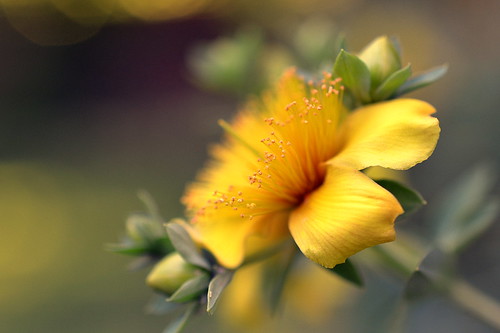
closer look Yesterday, I spent two hours in my yard. I made new flower beds last fall, using compost and cardboard. I worked in one bed: digging out dandelions (how do they still exist in no-light conditions?), cleaning grass from edges, and loosening soil. It felt good to place my hands in dirt; to connect with the earth. It also felt good to be outside: to hear birdsong and talk with neighbors.

After planting groundcover in the front bed, I walked into the backyard. My intention: obtain an overview of my other garden spaces. But my “overview” turned into a focused mission: get rid of weeds. I was hijacked by some primal part of my brain, and although I was tired, I went to the garage for a trowel and began digging out weeds. Once I started looking, I saw weeds everywhere.

I credit my mindfulness practice with bringing me back—back to patience, perspective, and gratitude. I dropped the trowel, stood up, and walked slowly around the yard. Having released my grip, both literally and figuratively, I felt ease and wonder. I looked at copious plants, in different states of development. I saw possibility: open spaces where I can transplant or plant anew. I felt satisfaction with my careful work in the front bed. 

Gardening provides me important life lessons. Here are a few from yesterday:

1. When I focus on weeds, I ignore beautiful flowers. Where I regularly place my attention becomes the habit of my mind. When I cultivate peace, compassion, and generosity, I feel better. When I feed resistance, irritation, and judgment, I feel worse. Sometimes I incorrectly believe there’s no choice: I see only weeds and work angrily to get rid of them. Most times, I recognize the choice: yes, there are weeds—in the ground and in my mind—which I'll never eradicate, but I can be with them differently, and I can also consciously savor the flowers.
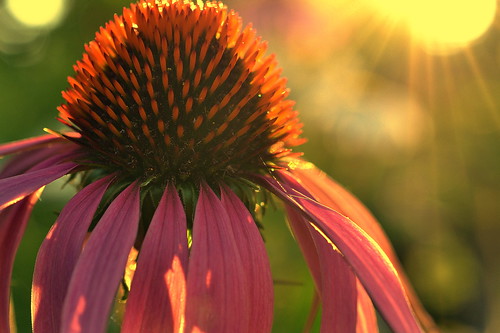
wait patiently

2. Everyone has weeds. When I inhabit the small-mind of ego, I take things personally. My thoughts feel real but aren’t true: “My yard is the only one with weeds—it’s a personal failing; I'm the only person who feels shame and inadequacy.” These untrue thoughts isolate me when I most need connection. We all have weeds. We all feel pain. It’s part of our shared humanity. Deep connection comes when we show each other our “weeds” and accept one another as the beautiful, imperfect creatures that we are.

3. Persistent effort is important; patience is even more important. My garden brings me satisfaction, both in short-term effort and long-term results. Still, I get tugged by impatience: I want all the weeds gone now; I want all the planting done now. These are just thoughts. And they aren’t actually true. My true intentions: to enjoy my experience; to feel satisfied but not exhausted; to work, not from fear or anger, but from love and creativity. This requires patience. I need to put in effort, but I also need the gentle reminder that everything takes time. 

--
E-Course: Coming Home to Yourself | Monthly Mindfulness | About Joy |
Guided Meditations | Facebook Page | Photography

January 3, 2017

Truth Tuesday


I began my “Truth Tuesday” series as an antidote to on-the-surface sharing within social media. If we only see people’s public faces—faces that appear happy, well-adjusted, and successful—we miss the real story, because we all struggle. Just as we feel love, happiness, and excitement, we equally feel sadness, doubt, and fear. None of us has all our sh&t together, and it’s helpful to hear this from other people. Our imperfections connect us as much as our successes.

While in academia, I often felt inadequate. I thought I failed my PhD comprehensive exams. After receiving a formal letter saying I passed (which is a big, awesome deal), I immediately wondered if they made a mistake. When I got tenure, instead of focusing on the positive, amazing student and colleague comments, I chewed on the few minor criticisms. I had earned tenure, but was I legitimate? This is the all-too-common “impostor syndrome.” Many of my colleagues felt the same way, though we didn’t talk about it. But here’s the deal: It’s helpful to talk about it. Not to ruminate on it or believe it, but to openly share doubts and fears. This connects us in important ways.

Just recently, I gathered with a group of talented, hard-working, gifted women. All of us in service careers, trying to help others. Through honest conversation we admitted how, at times, we feel like frauds. Who am I to teach mindfulness? I sometimes yell at my computer. I spend entire meditation sessions lost in thought. I still judge myself harshly. Academics or service workers, we all experience doubt. None of us has all our sh&t together.


I’ve learned something about doubt: If it speaks in an unkind way, it’s not to be listened to. There’s wise discernment: “This isn’t my strength, but it’s important for my career, so I’ll ask for help.” And there’s unhelpful, untrue doubt: “I’m a fraud and should quit.” When I feel safe to speak aloud my doubts, it’s easy to see whether they’re helpful or silly. If we share honestly, we feel less alone and better able to see our gifts or ask for help.

Who am I to teach mindfulness? I’m exactly the person, because I practice every day. When I scream at the computer, I step away and reconnect with myself. When I have busy mind, I still make time to meditate. When I judge myself, I try to apply self-compassion. I’m imperfect and in-process, and from this place, I connect more deeply with students, friends, and strangers.

PS: You can follow my "Truth Tuesday" series on Facebook.

--
E-Course: Coming Home to Yourself | Monthly Mindfulness | About Joy
Guided Meditations | Facebook Page | Photography 

December 13, 2016

Let's Be Real


Recently, at the farmer’s market, I felt anxious: As I talked with my favorite farmer while he weighed my produce, I noticed a line forming behind me, people whose body language indicated “hurry up.” Within moments, I was absent from the lively conversation. I was in exit mode, and then I felt crabby. Upon reflection, I assumed this response came from my role as peacemaker: wanting everyone to be happy. But digging deeper, I realize my reaction came from a place of fear: not wanting to be wrong or make a mistake—not wanting attention in a negative way.

This is a long-held fear: making mistakes; being openly imperfect. I try to divulge truths of imperfection, but underneath there’s a nagging feeling of “not enough,” and then I judge myself for fearing failure as I simultaneously encourage others to be real and genuine. This is a vicious cycle, because we need to be real with each other. I feel most safe when surrounded by people who allow for mistakes; who accept me as is, even as they see where I can grow. People who tell me hard truths when needed, but don’t make a big deal about the small stuff.

This is what I try to create for everyone I encounter. And still: I fear failure. Not even in epic ways, but in everyday ways. So, the safe space that needs nurturing is within myself: allowing—perhaps encouraging—mistakes, so I can learn, grow, and heal. Being real with myself from a place of love and compassion.

--
E-Course: Coming Home to Yourself | Monthly Mindfulness | About Joy
Guided Meditations | Facebook Page | Photography 

July 23, 2014

Under Construction


In 2001, I created my first webpage. Unsure of my work, I included a hard-hatted man next to the words "under construction." My initial viewer was Mark. (Besides being my husband, he's a software engineer with a good eye.) He gave many suggestions, but this was his first: "Every webpage is under construction, always. You needn't make that announcement." 

Thirteen years later I see that everything is under construction. Every idea, project, and relationship. We're all works in progress. It's impossible to wrap up life with a colorful bow and say "done!" Life is continual practice, sometimes on shifting ground. Everything is under construction. But this feels vulnerable, so we protect ourselves with explanations. This is only a first version, an initial idea and I'm in the process of making changes (read: these are all the reasons my work is imperfect).

I often provide unneeded words of clarification or explanation. This habit has stumped me for years. I assumed my behavior was unconscious armor against the judgment of others. Yet when I look deeper, I see it as distraction from my own self-judgment, which is far fiercer than external criticism. With this insight, I have a new practice: each time I feel my throat tighten around words of justification, I try to come home to myself. I notice my breath. I investigate and stay with difficult emotions. I treat myself tenderly. And I do this over and over again. 

July 2, 2014

True Confessions


I slowly looked through a women's magazine. I sat with the images, the perfect images. Everyone's skin was flawless--no scars, wrinkles, or spots. Page after page of glowing, perfect skin. Impossibly perfect skin. 

As a photographer, I understand the importance of light. If only our lives were bathed in golden light. Instead, we see ourselves in varied light with unflattering views. So what is real? What is real in a culture of photoshopped models and my-life-is-beautiful social media? 

What's real for me is when I get offline--when I walk outside, hug a friend, savor a meal, share from the heart, or laugh with Mark. Life is messy. And I'm grateful for every messy moment. As a counterweight to all the impossibly perfect skin in magazines, I share with you some true confessions:

I'm not a natural blonde. Every six weeks I receive highlights from my stylist, Sarah. Here you can see my roots just before an update:


I delete 90% of the photographs I take. I shoot hundreds of images a day in order to get one I really like. I take many bad photographs.

I get frustrated by piles of dishes stacked in our drying rack. On occasion I start throwing the non-breakables around, to which Mark responds, "Yeah, take that!" And I smile.

If two words sound alike, I sometimes misuse one for the other, with the incorrect meaning. Me, the writer. 

Our lawn is one-half grass and one-half weeds. My flower beds are dense and wild (with fewer weeds).

I regularly have a good cry. Sometimes for a specific reason and other times because I feel generalized sadness. I always feel better after I cry.


I have no good reason, but I dislike crows. [Later: My friend Amy convinced me that crows are immensely likable. I'm sure there's something else I dislike for no good reason.]

I am both grateful for and horrified by the attention I get on Flickr. 

I have very deep laugh lines. And red, broken blood vessels all around my nose. 

I sometimes take inauthentic actions because I want someone to like me.

I'm a mindfulness teacher and some days I don't feel very mindful.

Sitting too much makes my lower back hurt. Stretching, yoga, and pilates make my back feel better. Some days I sit too much at the computer and don't stretch. Other days I stand at the computer and take yoga breaks. Life isn't perfect. And I'm grateful for every messy, imperfect, real moment. I'm grateful for it all.

April 25, 2014

Start Where You Are


At times, I feel equipment envy. I crave a better camera or a new lens. I dream of crisper shots and bigger prints. But then I remember: I have much to learn about light and composition. My bare-bones camera is enough. It's not about the equipment, it's about how I see the world.

Often we mistakenly think better equipment will make us happy. We want a better body or a new gadget. Yet life is not about the equipment. It's about starting from exactly where we are. One of the way we sabotage ourselves--our creativity, well-being, or relationships--is by this untrue story: I can't start something unless everything is perfect. I'll take a photography course after I buy a good camera. I'll sign up for yoga once I lose weight.  I'll nurture myself and my relationships when my schedule's less busy.

But life is always messy and imperfect. If we wait for just the right moment, we'll never begin. Wherever you are, that's the place to start--with honesty and gentleness. You have all the equipment you need. Start in this moment. What magic awaits you?

January 23, 2014

Beautiful People


Images surround us. Magazines, movies, and billboards teem with blemish-free faces and sculpted bodies. They harshly whisper: purchase products, lose weight, and physically change. But that's not real beauty. Beauty works its way inside out. Beauty finds itself in kindness, imperfection, vulnerability, and presence. 

Elisabeth Kubler-Ross keenly describes this idea: "The most beautiful people we have known are those who have known defeat, known suffering, known struggle, known loss, and have found their way out of the depths. These persons have an appreciation, a sensitivity, and an understanding of life that fills them with compassion, gentleness, and a deep loving concern. Beautiful people do not just happen."

The darkness adds to our light. The pain makes more visceral our freedom. Our sadness is a sign of great love. There is beauty in us all. But it doesn't just happen (and it doesn't come in a bottle). When we honor the struggle, we more clearly see our own unique light. We more clearly see our beauty and the beauty of others.

December 4, 2013

Be Vulnerable (Be Brave)


What does it mean to be brave? The Oxford Dictionary claims it's the readiness to face and endure danger or pain. Certain kinds of bravery are revered in our culture; others are overlooked. I think it's brave to be emotionally vulnerable--to face fear, hurt, shame, disappointment, and grief. To not only face these emotions, but to honor and tend to them.

Yet there are few models of brave vulnerability. Our cultural discourse leans toward judgment and certainty. In response, we create emotional armor. Armor that disconnects us from others. It disconnects us from ourselves. This protection might allow us to face pain, but it's not sustainable for enduring pain. It's not wholly brave.

Before we can be brave, we must understand vulnerability. We must explore our tender places and gradually expose them--in small and safe ways. I think it's brave to declare a dream, share a difficult piece of our story, and lead from our hearts. It's brave to be uncertain and try anyway, to express gratitude and love, and to make purposeful choices (perhaps different from those around us). I think vulnerability is a gift. And as I accept this gift, I become stronger, braver, and more alive.

It's not easy. And it's never complete. We can spend a lifetime noticing and embracing our vulnerabilities. We can spend a lifetime understanding what it means to be brave. A lifetime fully lived and experienced. Sounds like a worthwhile journey.

November 15, 2013

What Happened on Monday


My niece Emma gave a suggestion for this blog: include a few whimsical or what-happened-this-weekend posts ("your blog is cool, but sometimes it's like really deep"). Emma also made a PowerPoint presentation where she offered me new career paths (e.g., Mrs. Clause, children's book author, rickshaw operator). She's a creative, soulful, and humorous girl. This post is in her honor.

Monday was weird. It was exactly my vision of morning routine: meditation, breakfast, free writing, work on my book that's not a f***ing book. Yet my words felt forced and my mood dark. So I took a walk with my camera. (Yes! Take a break and do another creative activity. It's all part of my vision.) The weather was cold and windy. My hands went numb. I shot a few photographs and returned home. All day this tape played in my head: my writing voice makes me want to vomit; it's always the same--blah, blah, blah; this is torture.

Later, I wept on the stairs described my discomfort to Mark. His response: "Isn't that what all writers think? In fact, doesn't that indicate you're actually a writer?" In the midst of my doubt attack, I smiled then laughed. My husband is observant and funny. (Maybe he should be the writer.)

That night I spoke with Emma on the phone. In a previous email she asked, "Have you published a book yet?" After rich and varied conversation, I mentioned the book--no, I haven't published anything, but I have topics and notes for nine chapters. Her enthusiastic response: "Really?!" Yes, it's the book about life + photography. "No, I meant the children's book." Again, I smiled then laughed. She shared helpful advice: children love bright colors, curvy lines, and inanimate objects that talk. (Maybe she should be the writer.)

Besides all the laughter, there is some good news. When I danced around my living room to loud music I felt no doubt or judgment. Do you think Florence & The Machine needs untrained yet spirited back-up dancers? 

November 8, 2013

Return to Your Own Life


Stay on your own yoga mat; dance like nobody's watching. These words encourage inward not outward vision. Comparing-mind is a dark, sticky place. In either direction (I'm worthless or I'm overlooked) there's unnecessary pain. Comparing ourselves to others--looks, accolades, talents, ideas--leads us away from our own hearts; removes us from our own lives.

When I take a photograph, brainstorm a course, or extend a dinner invitation with the intention of being noticed--of being seen and liked--my work isn't genuine; it's flat. When I'm centered (awake to myself) I enjoy the creative process and I'm less attached to outcome. Not surprisingly the quality of my work improves--it's full of life. 


The easiest antidote for my comparing-mind: get off the Internet, close the book, or recycle the magazine; spend intentional time with myself. What is the quality of my heart? What piece of me needs attention? I listen and nurture. (That which I seek externally can only be fulfilled internally.)

It's human nature to compare. And our culture provides countless opportunities for comparing-mind. It's helpful to notice these opportunities for comparison. And then get really curious about our response: How does my body feel? What emotions arise? What thoughts flare? Do I feel constricted or expanded? 

Signals that I'm in comparing mode: when viewing or reading the ideas of others, I feel my chest tighten and my thoughts race. My thoughts urge action, but my most nourishing choice is non-action. It's precisely the time to sit quietly with myself. To access my own basic goodness. To return to my own complicated, beautiful, unique life.

October 24, 2013

Insight


Insight abstains when I actively do or think. Insight arrives when I'm spacious and aware. Last weekend I sat, ate, and walked in silent meditation. Cheri Maples described her experience with social justice and equanimity. She posed a question: how do I engage in the very habit I complain about? That struck me. Because earlier in her dharma talk--when she mentioned the doing, individualistic nature of society--I felt anger (read: complaint). How do I engage in this particular striving habit? By pushing myself to produce; by judging myself harshly; by not forgiving myself for even small infractions. 


I felt clearly the hard edges of my life--the inner-places not yet accepted. I walked and wept. I sat and wept. And in this process I developed deep tenderness for myself. A tenderness I hadn't yet realized I needed. Though I practice loving-kindness for myself and others, I was blind to the beauty of self-forgiveness. 

When I felt shame, I gently said: I forgive you. When I noticed myself lost in thoughts, I gently said: I forgive you. When I glimpsed my judging mind, I gently said: I forgive you. When I stumbled (or dropped a fork or misread words), I gently said: I forgive you. I not only whispered the words, I felt the forgiveness in my body.

Frustration and complaints are signals; they serve as bells of mindfulness. Sometimes the anger is at our own mistreatment of ourselves. I'm grateful for this insight. And I forgive myself for previous (and future) blindness.

July 14, 2013

Out of Focus


My last few weeks have been fuzzy. I'm ready to start new adventures, yet had to finish previous commitments. I have many ideas, yet no focus. I drew a mind-map, yet haven't followed any path. I want this freedom, yet feel naked without old identities. This is exactly the place in which I wanted to sit--to not know. But it's not a place I want to nest. 

I long for a routine--writing sessions all morning, with short breaks for meditation or yoga. Yet my day skitters away from me. Not in a purposeful lolling way, but in a boldly doing (nothing) way--doing without heart. Too much time online; too many to-dos driven by ego, not my authentic voice; too much pressing, not enough openness.


Yet none of this surprises me. My ego is strong and can jab me from multiple directions. It keeps me on the attention-grabbing doing path and keeps me away from the soul-filling path. And ego can't wait for me to fail at writing, so it can steer me back to safer waters. (Or if I'm going to succeed at writing, ego wants me to do it really, really fast.)

Sigh. 

I'm out of focus, but I noticed; that's always the first step. And the illusion of a perfect morning routine is quite off-putting. I just need to dive in. Flail or hover or flop or soar, I just need to start something and stay with it (even when it's hard). I need to find a path with heart. As I write this, I know I'm not far from that path. I'm connected with people, often connected with myself, and I'm engaged in creative endeavors. It's really a change in habit around work (and what "work" is). 

The focus is there, if only I turn the lens a few notches. Then the white blobs might turn into an actual daisy:

June 15, 2013

Why I Choose to Garden


I resisted gardening. As a teen, I wanted to play sports and hang with my friends, not pick strawberries or dig up weeds. (Sorry, Dad. In hindsight, that garden was really great.) As an adult, while my closest friends found contentment in their gardens, I held back. I told myself the story that gardening wasn't for me. My main points of contention: I would start from scratch and make mistakes (perhaps look like an idiot); my yard is huge and the project too big; I'd get hot, sweaty, and dirty (and yet not get a workout--or so was my thinking at the time). Basically, I was stuck in a cycle of perfectionism; I didn't want to try something if I might fail. (Actually, I didn't want to try something unless I knew I'd excel. That was a very constricted place to live.)

But I gained more life tools and experiences, and in that process I gained more wisdom and confidence. Then I didn't mind making mistakes--in fact, that's where I learn the most. Five years ago I began my garden experiment, which continues today. Now I receive great fulfillment and restoration while digging in the dirt. All I needed to do was try.


The Top Ten Reasons Why I Garden:

10. I get to play in the dirt. This brings out my inner-child--the younger one, not the teen that didn't like pulling weeds.

9. I'm surrounded by beauty. Oh, how I love flowers: love the plants, love the buds, love the blooms, love the colors.

8. I get practice with a long-term project. My ego tells me everything must be done at once, but gardening begs for small yearly changes that create big change over the long haul. It's a remarkable lesson.

7. I feel empowered. Digging a bed, moving piles of dirt, dealing with tree roots--these all make me feel strong and alive.

6. I eat freshly-picked tomatoes. The taste of a ripe, just-picked tomato is mind blowing.


5. I'm in nature. No need to travel to a breath-taking state park; I only need enter the backyard and I'm in tune with the natural world.

4. I'm filled with wonder. The plants can grow inches in a single day--how cool is that? And it's only the beginning.

3. I learn. Each year I learn something new just by trying something new--sometimes it works out, sometimes it doesn't. And it's all okay.

2. I'm in the moment. When I dig in the dirt, I simply dig; my monkey mind is momentarily quieted.

1. I better understand impermanence. Change is hard, yet life is full of change and uncertainty. The world is in flux. The less I resist this notion, the less I suffer. In gardening I clearly see my attachment to plants: when the weather or rabbits destroy something I've planted, I'm really sad. But lingering in that upset--or trying to control the uncontrollable--adds suffering. Bunnies will eat the plants I just put in the ground. (Dammit.) That's life. It's hard, but it's life. So I try to work with impermanence--some days are better than others.

March 19, 2013

The Real Me


Who is the real me? It's the me that's living life right now, in this moment. Most days, it's the me you experience. It's my calm, my excitement, my love, my fear, my play, my insecurities, my sharing, my curiosity. I've been asking my best friends what they think my "one thing" is--an exercise to help me (vaguely) focus my next chapter. My friend Steph said it's my realness. I took that comment into my heart. To be real is one of the biggest compliments I can receive. Honestly, I don't always feel real. Sometimes I feel distracted or unworthy or uptight. But I suppose owning that is part of being real.

Today I went into the office. I'm gradually clearing out; filling the recycling bin each time it's emptied. On this day I decided to have some fun with my office cleaning:


As I reflect on my time at Lawrence, I honor all my experiences. I remember the multitude of occurrences in my office: interesting questions, aha moments, tears of anxiety, giddy laughter, soul sharing, deep breaths, and lots of learning--from both me and my students. Leaving this job is a loss. But it's also a huge gain. Because the real me is completely at peace:


My friend Kristin gave me a wall hanging with the following quote (source unknown): "Peace. It does not mean to be in a place where there is no noise, trouble or hard work. It means to be in the midst of those things and still be calm in your heart." Sometimes I wonder if people have an incorrect impression of me--that I'm put together, zen-like, balanced, and constantly happy. Indeed, the real me is happy, contented, and kind, but I can also be cranky, judgmental, and frantic. That all said, I typically have calm in my heart. I trust in my kind heart. I return there regularly. 

So who is the real me? The me that will look you in the eyes, regardless of the circumstances, and give you my full attention and my open heart:

March 10, 2013

The Truth of the Moment


We view all interactions and experiences through a filter. Sometimes our filter is clear--like crystalline, still water, where it’s easy to see all the way to the bottom. Often our filter is clouded, and occasionally it's completely covered in black slime. In those moments, we can't see the truth of the moment. We're too involved in rumination, planning, anxiety, or old stories that we can't stay present; we can't hear the words of the other person; we can't see through the old movies playing in our heads. 

The Buddha gave analogies on how mind states hinder clear seeing: craving is like water filled with beautiful colors; aversion is like boiling water; sloth is like water covered in algae; restlessness is like wind-churned water; and doubt is like muddy, unsettled, cloudy water (lots of layers to doubt).


Craving (read: wanting) and aversion (read: fear, anger, anxiety) are human habits--habits to avoid difficult feelings. The craving typically comes from a feeling of lack. I want this do-dad, cookie, compliment, or change of scenery, because deep in myself I don't feel enough. Rather than sit with that pain, I feed my cravings. Although aversion is a different hook, it also comes from a place of dis-ease: something is wrong. When we experience the something-is-wrong feeling, we typically direct it in one of three places: something is wrong with me (self-judgment), something is wrong with you (anger), or something is wrong with the world (not fair!). Again, aversion arises when we avoid the dis-ease--instead of exploring the something-is-wrong feeling, we leap to anxiety or anger or judgment. If we miss craving or aversion completely, then we can fall into restlessness or sloth. And doubt is the mother of all hindrances--it weaves a nasty web of cloudy filters that are hard to detect (doubt is wily).


So many potential obstructions to clear seeing--no wonder there is war, oppression, and everyday misunderstanding. Seems hopeless, huh? Actually, it's not. Because the simple act of noticing can make a big difference. If we notice a not-enough feeling and sit with it (just for a moment), then we move forward on the clear-seeing path. One of the most powerful realizations I've gained from meditation is that I am not my mind state. I am not fear or sadness or excitement or crankiness or contentment. I experience these emotions, but they do not define me, and they always pass. Sometimes it feels like the fear will last forever, but it never does. And if I notice when the emotional weather changes, then I trust it will pass the next time, too.

Moving away from the present moment is a human habit--it happens to us all. (I could write an entire blog post on the multitude of ways I distract from difficult emotions.) We move away because of dis-ease. It's a well-grooved habit, but interestingly it doesn't take away the dis-ease; it's an avoidance path (which is sometimes quite necessary). The paradox is that moving into the truth of the moment (into the dis-ease) is the path to freedom. The more we trust in the present moment--whatever it brings--the more alive we are. And it's these moments that we can string together (bit by bit) to make a more contented life.

February 14, 2013

The Stories We Tell


I'm working through an interesting e-course called "The Story of You." I've long been interested in stories: telling my story (read: finding my voice); recognizing the different tapes that regularly play through my mind; noticing the stories (in all directions) that can cloud communication; listening to the lives of others. This week's pondering: does a particular way of telling my story (or living my life) move me closer to contentment? To freedom? To connection? I asked myself these questions just last night. Sitting in the hot tub, I ruminated on a particular situation. Indeed, I was telling myself a story (creating explanations and scenarios). When I asked the questions, I knew--I physically felt--movement away from freedom, connection, and contentment. What wonderful gatekeepers. So I recast the story in a different light that was more expansive. This small realization brought me to tears--tears of release. Another tool in my toolbox.

A different insight came from a list of mantras Jen and Ria proposed to the group. I read all the phrases and could accept them--could take them into my story. All but one: "She did not judge her flaws." I saw clearly the role of self-judgment in my life. Self-judgment provides me a perceived sense of control and perceived protection against hurt and sadness. (I purposefully use the word "perceived.") Judging my flaws has always been part of my story. In that way it feels comfortable, even though it's not truthful or helpful. Self-judgment does not move me closer to contentment, freedom, and connection. In fact, it cages me in a prison.  But it's a prison of my own making. I have a choice. Even now, as I write these words, I'm easing into a modified story line: "She did judge her flaws, but then she smiled and remembered she had a choice. So she chose to love herself just as she is."


December 11, 2012

Life as Paradox


I look through a magazine on blogging; articles encourage writers to be true to themselves (ignore the expectations of others), yet peppered throughout are tips to attract blog readers. Even my Shambhala Sun--a magazine about Buddhism and meditation--has a section for vendors (buy these prayer beads or this meditation cushion or attend this particular retreat). Such is the way of the world. Paradox is what it means to be human.

At a recent meditation retreat, I heard Cheri Maples thoughtfully discuss a particular paradox: take refuge in yourself while also embracing egolessness. That is, establish yourself as a safe place, yet reduce the volume of the "me" dial on the radio. Safety within yourself is healthful; making yourself a huge player in the story of life is suffering.


Regularly, I experience the paradoxes of life. In the same moment, I can feel both shame and peace; fear and love; grief and hope. I was drawn to Buddhist philosophy because it embraces paradox and encourages the middle path. When I was younger, my thinking was more black and white. There was a rigidity to some of my views. Now my thinking is much more gray. There is always some piece of the story to which I'm not privy; there's much more space around my views. I'm genuinely curious about the paradoxes of life. 

When I'm centered,  I feel relief and equanimity about my mom's transition to a nursing home. And that's precisely when ego steps in and encourages me to feel guilty. Yet when I allow myself to feel grief and sadness about my mom's situation, that's when ego chides me for continuing to feel something I've already worked through in therapy. Ego is wily. Life is interesting. We are all walking paradoxes. In the words of Pema Chodron (Start Where You Are), "None of us is okay and all of us are fine. It's not just one way." Indeed, life is not just one way. It's an ever-changing, paradoxical, difficult, and interesting ride.

December 7, 2012

11 More Things You Might Not Know About Me


Eleven more things you might not know about me (in no particular order):

1. I love garlic; when a recipe calls for a clove, I include the entire bulb.
2. I need white noise to sleep--specifically, the sound of a fan.
3. I'm not vegan because I love cheese.
4. I'm a movie snob; I won't watch a move that's not deemed fresh at Rotten Tomatoes (preferably above 80%).
5. I've always felt anxiety when stepping on a scale.
6. I get a massage every week.
7. I don't like my front teeth or my nose; I do like my eyes.
8. I sometimes don't wear my bike helmet.
9. I like to drink champagne just because (no celebratory news needed).
10. I wear the same home-from-work comfy clothes nearly every night. (I do wash them once a week.)
11. I care about my blog stats much more than I'd like to.
 

November 16, 2012

Looking Back


Last weekend I caught up with a close friend. We had a lovely, meandering, heartfelt conversation. During part of this discussion, I reflected on my graduate-school days in Iowa City. It's interesting for me to look back at that period of my life. As with most experiences, it's layered and not straight-forward.

In the first year of my PhD program, I waffled between feeling like the biggest idiot in the world and feeling completely capable and talented. Some days I sobbed after class; other days I walked home with a huge smile on my face. These complicated feelings stayed with me even as I finished my dissertation. Part of me doubted my ability; the other part felt confident and strong. (Lucky for me, I had advisors who believed in me even when I didn't believe in myself.)

I also struggled in my relationship to food (very restrictive) and exercise (too much). Yet at the same time I played doubles volleyball twice a week, which was the most positive, enjoyable athletic experience of my life. I worked with therapists to understand and heal old, painful wounds. Through this process I found my own strength and beauty. I met Mark in my second year of graduate school. I learned what unconditional love really meant.


Here's how I summarized things to my friend: I wouldn't want to go back to that time, but it was really important for me to go through it.

My seven years in Iowa City were part of my life path. A path of learning and growing that will continue until I die. Today I trust in my gifts, believe in myself and my abilities, savor really tasty food, work out in a way that's comfortable for my body, honor and move past my emotional scars, let go more often, and open my heart regularly.

Struggle has been an important teacher in my life. It's uncomfortable in the moment, yet incredibly helpful in the end. Most importantly, I know I'm okay even in the struggle. I trust. I experience. In my early years,  I deeply feared struggle (in a fear-of-death sort of way). But once I emerged from challenge after challenge, I began to relax. This is one of the many reasons why I LOVE getting older. Each year brings more experience, more perspective, more understanding, and more love.